
Is continuous edible oil refining equipment better than intermittent one?
In the modern food processing industry, the refining of edible oil is a crucial link. With the continuous progress of technology, there are many types of refining equipment in the market, of which the most common are continuous and batch. So, is the continuous edible oil refining equipment better than the batch one?
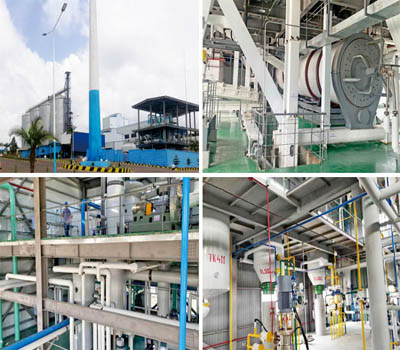
First of all, we need to understand the basic principles of these two devices. Batch refining equipment usually carries out multi-step treatment in a closed system, including degumming, deacidification, decoloration and deodorization. After each step is completed, it is necessary to move to the next step manually or mechanically. The advantage of this method is that it is simple to operate and suitable for small batch production, but its disadvantages are also obvious, such as low production efficiency and high labor cost.
In contrast, the continuous edible oil refining equipment is more advanced in design. It realizes the seamless connection of each refining step through a series of connected equipment, and the whole process is highly automated, which can greatly improve the production efficiency. Continuous equipment reduces the necessity of manual intervention, not only reduces the labor cost, but also reduces the errors caused by human operation. In addition, because the continuous equipment can stably control the process parameters such as temperature and pressure, the quality of the final product is more guaranteed.
However, continuous equipment is not without defects. Its initial investment is large, and the professional and technical requirements for operators are higher. In addition, for small-scale production enterprises, continuous equipment may not be the best choice because of its large capacity, which may lead to waste of resources.
To sum up, continuous edible oil refining equipment is indeed superior to batch equipment in terms of efficiency and product quality control, but its applicability needs to be judged according to the specific needs of enterprises. For large-scale production enterprises, especially those pursuing high efficiency and high quality, it is undoubtedly a wise choice to invest in continuous equipment. For small-scale production or enterprises with limited funds, batch equipment may be more economical and practical. In the selection, we need to comprehensively consider many factors such as production scale, capital investment and technical ability, so as to find the most suitable scheme for our own development.