
By-products and waste liquid treatment problems that are easily overlooked in purchasing edible oil refining equipment
Many oil plants purchase edible oil refining equipment, and the first sentence asks: how many tons, how much money and how much oil yield are produced per day.
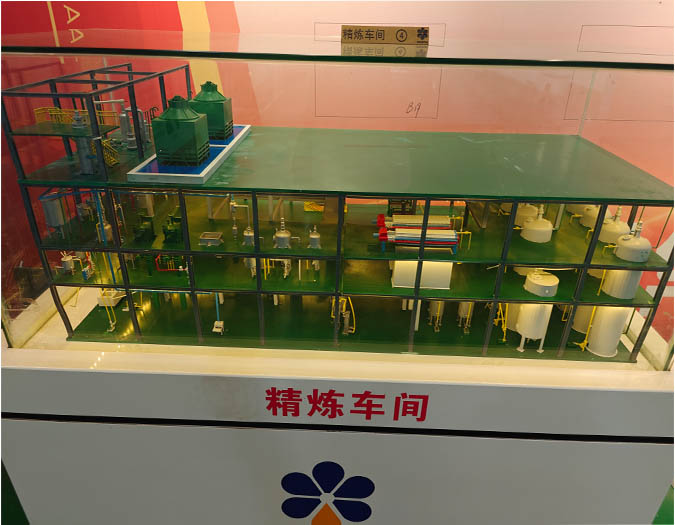
However, few people think in advance: How to deal with the soapstock, waste clay and wastewater produced by refining. It was discovered after the production that the by-product treatment could not keep up, the EIA got stuck, the workshop was messy, and the waste could not be piled up, which directly led to the forced shutdown of the production line. This is an unpopular but fatal procurement blind spot in the oil industry.
First, soap residue (soap oil): not garbage, but costs and benefits.
The deacidification process will produce soap residue, that is, soap-oil mixture.
Low-cost equipment is often only responsible for oil refining, and it is not equipped with a soap residue separation and recovery device. Soap residue is easy to spoil and stink, pollute the workshop, and waste the oil entrained in it.
Small-scale batch refining: The output of soapstock is not large, which can be simply precipitated and sold to feed mills;
Medium-and large-scale refining line: It is suggested to set up a soap foot acidification device to recover the grease in the soap foot and convert it into acidified oil, so as to increase an extra income.
When purchasing, you must ask the manufacturer whether the equipment is equipped with a soap discharge interface and whether it can be equipped with an acidified oil recovery system. Don’t wait until the pipeline is put into production, and then transform the pipeline separately, because the cost of transformation is very high.
Second, waste clay: solid waste produced by decoloration, which is the key verification item of EIA.
Activated clay is used to adsorb pigment in the decoloration process, and it becomes oily waste clay after being used up. Waste clay absorbs grease, which belongs to oily solid waste and cannot be piled up and discarded at will. Improper stacking will lead to oil leakage and spontaneous combustion, and environmental inspection will directly punish you.
Small oil mill: The output of waste clay is low, and it is packaged and handed over to qualified recycling units; The production line with large output can be equipped with clay filtering and squeezing oil extraction devices to recover residual oil in waste clay, reduce loss and reduce the weight of solid waste.
When purchasing equipment, confirm the design of the filtration system, whether it is convenient for waste clay to be discharged and collected in a closed way, and avoid dust and oil stains from scattering. The discharge ports of many cheap refining tanks are poorly designed, and manual cleaning is troublesome, and the workshops are covered with oil sludge all the year round.
Third, refining wastewater: the first hurdle of EIA.
Degumming and water washing processes will discharge oily wastewater. Water contains oil, phospholipids and a small amount of acid and alkali, so direct discharge cannot pass the environmental protection acceptance.
Many customers only look at the mainframe when buying equipment, ignoring wastewater pretreatment. It was not until the acceptance stage of the factory that it was found that there was a lack of oil separation and sedimentation facilities and it was impossible to start construction.
Confirm two points before purchasing:
1. Equipment wastewater discharge and oil concentration of water quality;
2. Whether the manufacturer can provide a supporting simple oil separation scheme, or suggest the pretreatment process of docking wastewater.
Fourth, the by-product treatment scheme directly affects the equipment selection.
Fourth, the by-product treatment scheme directly affects the equipment selection.
1. If you work in a small oil mill and process with supplied materials, the output is low: Intermittent refining is preferred, and the output of soapstock and waste clay is small, so you can simply collect them and sell them outside, without putting them into a large-scale recycling device.
2. Large-scale continuous production: We must incorporate soap residue recovery, waste clay collection and wastewater pretreatment into the whole scheme. The income from by-product recovery can offset part of equipment investment in the long run.
Fifth, an extra detail: dead angle of pipeline and residual oil.
Many manufacturers only publicize the tank material, but ignore the dead angle of pipeline, valve and elbow. There is a dead angle in the residual oil accumulation, which will pollute the next batch of oil products and increase the cleaning workload. Good refining system, pipeline design to reduce dead angle, reasonable layout of sewage outlet, convenient to drain residual oil, reduce oil waste and reduce the amount of cleaning waste liquid.
When selecting edible oil refining equipment, we can’t just focus on the output of refined oil. A complete and feasible scheme must simultaneously consider the recovery of solid waste, waste liquid and by-products. Environmental protection and by-product income determine whether your factory can stabilize long-term production. If you are planning a edible oil refining plant, we can design a complete process plan for you, including by-product recovery and solid waste liquid treatment, in combination with your production capacity and local environmental protection policies, and obtain detailed plans and quotations.