
Why is it easy to make mistakes when selecting a peanut oil production line?
When purchasing a peanut oil production line, many companies focus primarily on price quotes and individual machine models, while overlooking the overall compatibility of the entire line. A lower initial purchase price does not necessarily translate to lower long-term operating costs.
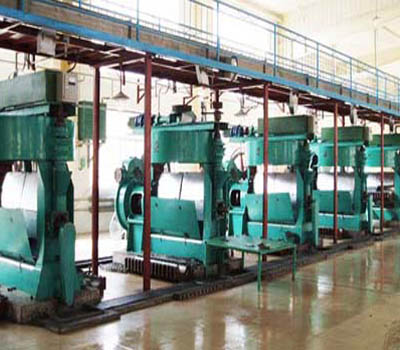
Mismatched Production Capacities
Raw material handling capacity, pre-pressing capacity, secondary pressing capacity, and filtration capacity are distinct metrics. Relying solely on the rated capacity of a single piece of equipment can lead to bottlenecks—where the upstream supply exceeds the downstream processing capability. Before selecting equipment, it is essential to clearly define raw material specifications, the process flow, and target production output.
Layout Planning Beyond the Equipment Itself
Simply having enough physical space to fit the machinery does not guarantee a smooth-running production line. Maintenance access, material transport paths, temporary storage areas for raw materials, oil-cake storage, and bottling/packaging zones must all be planned in advance to avoid the need for frequent material handling or costly facility modifications after operations begin.
Underestimated Maintenance Costs
Tasks such as screen cleaning, maintenance of pressing screws and bars, replacement of wear parts, and filtration/residue discharge all impact downtime and labor requirements. When purchasing, verify the ease of maintenance, availability of spare parts, and the responsiveness of after-sales support.
Imbalanced Automation Configuration
Insufficient automation leads to an over-reliance on manual labor, while excessive automation may exceed both your budget and your operational management capacity. The level of automation should be selected based on the expertise of your staff, the scale of production, and future expansion plans.
The key to selecting the right peanut oil production line equipment is not choosing the most expensive or the cheapest option, but rather ensuring that production capacity, space requirements, maintenance needs, and the level of automation are all well-aligned.